


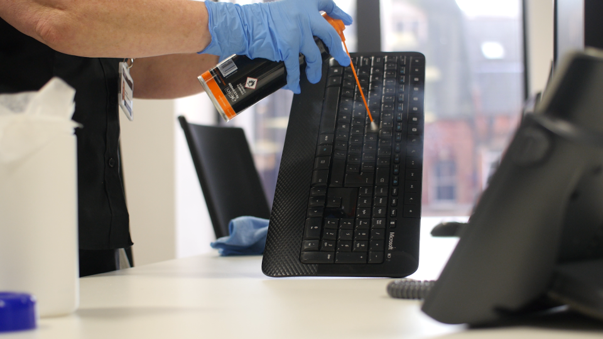
Modern businesses rely on IT infrastructure for almost every part of their operations. From cloud applications and customer databases to artificial intelligence and online services, the systems running behind the scenes need to remain available and reliable. Professional IT equipment cleaning services help businesses protect these essential systems by controlling dust, reducing contamination and supporting reliable operating conditions.

This makes the condition of server rooms and data centres more important than ever. As equipment becomes more powerful and data processing becomes increasingly intensive, these environments can generate significant heat while operating at higher equipment densities. At the same time, even relatively small amounts of dust and contamination can affect airflow, cooling and equipment performance.
Why Data Centre Cleaning Services Are Becoming More Important
The UK’s data centre market is continuing to expand as demand grows for artificial intelligence, cloud computing and other data-intensive technologies.
As more computing power is installed in smaller spaces, keeping equipment and surrounding areas clean becomes increasingly important. Higher equipment densities can place greater demands on cooling systems, making good, consistent airflow essential. Investing in regular professional data centre cleaning services helps to remove dirt, dust and debris that can clog vents, block fans and cause equipment to overheat.
How Dust Can Affect IT Equipment
Dust is easy to overlook because a small amount may not appear to cause an immediate problem. In a server room, however, contamination can accumulate around equipment, vents, cable routes and flooring.
Over time, dust can restrict airflow and settle on components and cooling surfaces. When airflow is reduced, cooling systems may need to work harder to maintain suitable operating temperatures.
Excess heat can increase the strain placed on equipment and cooling infrastructure. For businesses that depend on continuous access to critical systems, preventing these problems is preferable to dealing with the consequences of an avoidable equipment issue.
Effective server room cleaning focuses on removing dust before it becomes a significant source of contamination.
Why Standard Commercial Cleaning Is Not Enough
A server room isn’t an ordinary office. Conventional cleaning methods can introduce risks that need to be carefully controlled around sensitive electronic equipment.
For example, excessive moisture, unsuitable cleaning products or static electricity can potentially damage IT hardware. Cleaning teams also need to understand how to work safely around cables, racks, power supplies and other critical infrastructure.
Professional IT equipment cleaning services use methods designed specifically for controlled technology environments. Depending on the facility, these may include:
- HEPA vacuuming to capture fine particles
- Anti-static cleaning procedures
- Specialist cleaning tools and materials
- Controlled access to sensitive areas
- Detailed cleaning schedules
- Appropriate personal protective equipment
The exact approach should be determined by the equipment, environment and operational requirements of each site.
Understanding ISO 14644-1 Requirements
Cleanliness requirements can be particularly important in sensitive IT environments. ISO 14644-1 is an international standard for classifying air cleanliness in controlled environments according to airborne particle concentration.
Some major equipment manufacturers specify operating environments that meet particular cleanliness standards, including ISO 14644-1 Class 8 conditions. Meeting these requirements involves more than simply removing visible dirt. Particle levels and environmental controls need to be properly considered.
This is another reason why data centre cleaning services should be delivered by teams with appropriate knowledge and experience rather than treated as an extension of general office cleaning.
Protecting Uptime And Business Continuity
Downtime can have serious consequences for organisations that depend on IT infrastructure.
An interruption could affect customer services, internal operations, communications, online platforms or access to essential business data. For businesses running critical applications, even a relatively short outage may have financial and operational consequences.
Cleaning alone can’t guarantee uptime, but it forms part of a broader preventative maintenance strategy. Regular server room cleaning can help control dust and contamination while supporting the environmental conditions required by sensitive equipment.
This is particularly relevant as businesses increasingly operate AI workloads and other systems that demand substantial computing capacity.
Cleaning Needs To Be Carefully Planned
Cleaning a server room or data centre isn’t simply a matter of sending a team in with vacuum cleaners. The work needs to be planned around the technology and the operational requirements of the facility.
Before cleaning begins, a professional team should understand:
- Which areas contain critical equipment.
- What access restrictions apply.
- Which cleaning methods and products are suitable.
- Whether any equipment needs to remain operational during cleaning.
- How cleaning activities will be documented.
- What site-specific health and safety procedures must be followed.
Controlled access is particularly important. Data centres can contain sensitive infrastructure and restricted areas, so cleaning personnel should follow the same security and access procedures expected of other contractors.
Choosing Professional IT Equipment Cleaning Services
The right cleaning team should understand that a data centre or server room is a controlled environment, not simply another commercial workspace.
Facilities managers and IT directors should look for evidence of relevant experience, appropriate training, suitable equipment and robust working procedures. It is also important to establish how contractors will manage access, protect sensitive equipment and communicate with the wider facilities team.
A professional approach should focus on prevention rather than waiting until contamination becomes visible. Our specialist cleaning teams work in controlled and sensitive environments. Contact us to discuss a programme for your data centre or server room.


- Why IT Equipment Cleaning Is Now A Business-Critical Service - October 8, 2026
- How Often Should You Get Your Office IT Equipment Professionally Cleaned? - September 24, 2026
- When Should You Replace Vs Clean Your Office Carpet? - September 10, 2026