


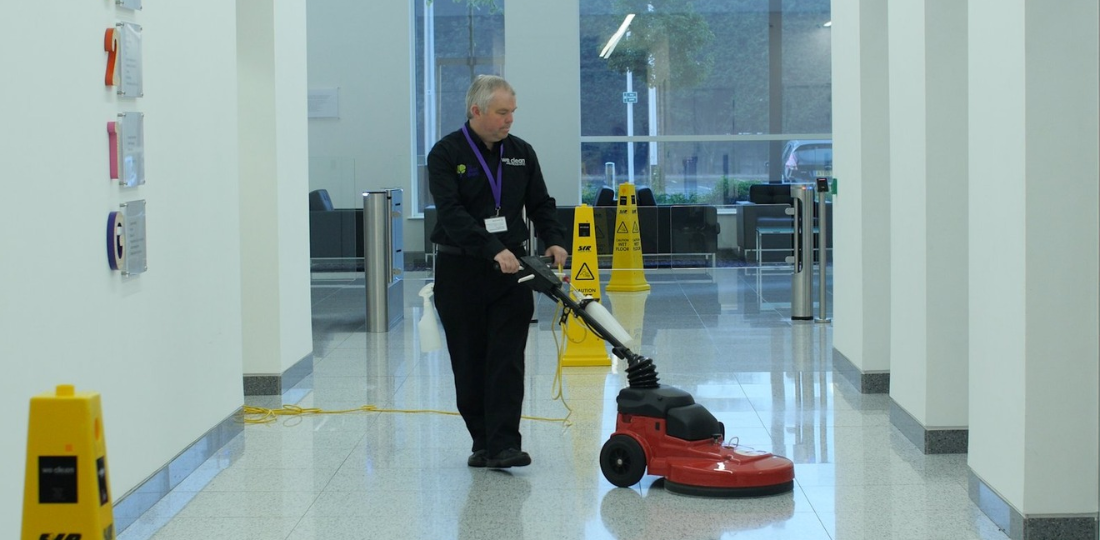
Whether you manage a corporate office in Birmingham, a retail venue in the Black Country, or a specialist industrial site in the Midlands or Bristol, your cleaning provision is a critical part of your infrastructure.

In many ways, a cleaning partner is a silent ambassador for your brand. When a client walks into a pristine reception area, they immediately feel a sense of confidence in your professionalism. Conversely, dusty surfaces, stained carpets, or neglected washrooms can create a negative impression that is hard to overcome. As well as reputation, the impact on your internal team is significant, with a clean, well-maintained environment helping to boost employee wellbeing and productivity. This guide is designed to help you navigate the complex process of appointing a commercial cleaning contractor by looking at the structural, legal, and operational factors that separate a basic service from a high-quality partnership.
1. The Hidden Costs Of Choosing The Wrong Cleaning Provider
It is often tempting to select a cleaning provider based solely on the lowest quote, but an unusually low price often masks systemic weaknesses that can cost your business more in the long run. One major issue is inconsistent service quality; many contractors start strong but allow standards to slip within months without robust supervision, eventually forcing you to spend your own time managing their staff.
Furthermore, low-cost providers often pay minimum wage and offer little training, which leads to high staff turnover, a constant stream of new faces, and an increased risk of no-shows. There are also significant health and safety risks to consider, as providers that cut corners on price often cut corners on training and insurance, potentially leaving your business liable for accidents. Finally, a cheap contract may exclude essential services like window cleaning or consumables, leading to constant and unexpected budget creep.
2. What To Look For In A Reliable Commercial Cleaning Partner
A reliable partner should manage the entire cleaning process so you don’t have to, ensuring that the standards agreed upon on day one are maintained throughout the life of the contract.
Sector-Specific Expertise And Experience
Commercial cleaning requires an understanding of specialist cleaning methods and ways of working that domestic cleaners often lack. Your partner should demonstrate expertise in your specific sector, whether it is industrial, educational, or corporate, as different environments require unique safety protocols and finishes. Look for a track record of managing contracts of a similar scale and complexity to your own.
Investment In People And Professional Training
The quality of a clean is fundamentally determined by the person holding the cloth. Professional contractors invest heavily in their staff through thorough vetting processes, such as DBS checks, and comprehensive training on equipment and chemical safety. Reliability starts with a workforce that feels respected, properly equipped, and valued within the company culture.
Robust Supervision And Quality Control Systems
You should not be the person responsible for checking if the work has been completed correctly. A reliable partner will have a tiered management structure with site supervisors and area managers who conduct regular, documented audits. These systems ensure accountability and guarantee that the service level agreement is being consistently met.
3. 11 Essential Questions To Ask Before You Appoint A Cleaning Contractor
When interviewing potential partners, it isn’t enough to just ask if they can do the job. You need to understand the how and the why behind their operations. Each of these questions is designed to reveal the structural integrity of a cleaning company and help you avoid the common pitfalls many businesses fall into.
1. How long have you worked in commercial cleaning, and do you specialise in commercial contracts only?
Why this matters: Stability in the commercial sector is a strong indicator of reliability. A company that specialises only in commercial work understands that a business environment operates differently from a domestic one. They are familiar with the high-stakes nature of commercial deadlines, the specific safety requirements of industrial sites, and the unique wear-and-tear patterns of high-traffic office spaces.
2. How are your staff trained, vetted, and managed on a day-to-day basis?
Why this matters: You need to know that the people entering your building are trustworthy (vetted) and capable (trained). Furthermore, daily management is crucial; if a cleaner has an issue on-site, they need a supervisor they can contact immediately to resolve it without bothering you.
3. What quality assurance processes are in place to ensure standards don’t slip?
Why this matters: Most cleaning complaints arise because standards slip after the first few weeks. Quality assurance (usually in the form of regular, documented audits by an area manager) creates accountability. It ensures that the honeymoon period doesn’t end and that the service level agreement you signed is being met every single day.
4. Can you provide references from similar clients within my specific sector?
Why this matters: A company that cleans schools effectively might not understand the specific requirements of a medical facility or a heavy industrial warehouse. References within your own sector prove that the contractor already has the specific knowledge, chemicals, and equipment needed to handle your unique environment.
5. How do you handle staff absence or emergency cover to ensure reliability?
Why this matters: Reliability is the biggest challenge in the cleaning industry. If your regular cleaner is ill, does the work simply go undone? A professional partner will have a mobile team or a pool of vetted relief staff who can step in at short notice so that your bins are always emptied and your washrooms are always stocked.
6. What does your reporting and communication look like, and will I have a dedicated contact?
Why this matters: In the event of an issue, you don’t want to be calling a generic customer service number. A dedicated account or area manager provides a direct line of communication. Efficient reporting also means you receive regular updates on audits and health and safety checks, giving you peace of mind that everything is under control.
7. What technology do you utilise to help your team do the best job?
Why this matters: Old school methods of cleaning are fast fading for professional cleaning teams. Robotic and autonomous cleaning equipment such as scrubber dryers and vacuums are becoming increasingly common in many commercial environments thanks to their superior strength, cleaning consistency and efficiency, and any team that has such equipment has much more time to spend on other tasks. Additionally, electronic equipment such as the iMop Pro allows team leaders to oversee metrics and feedback on usage, performance and downtime. Many commercial cleaning companies also prioritise the use of client portals that hold detailed information on client financial data, consumable spend, and ancillary services, plus digital timekeeping services such as Clenetix allow complete visibility on staff performance overall. This level of oversight ensures a much higher quality service.
8. Do you offer tailored cleaning plans rather than a generic one-size-fits-all approach?
Why this matters: Every building is different. A one-size-fits-all quote often results in you paying for services you don’t need or missing out on essential tasks. A tailored plan means the contractor has walked your site, identified high-traffic areas, and designed a schedule that fits your specific operational hours and budget.
9. What sustainability practices do you follow regarding chemicals and waste?
Why this matters: Corporate social responsibility is now a key part of procurement and many cleaning companies are moving away from chemical cleaners and mains powered equipment. If your business has environmental goals, your cleaning partner should support them. This question reveals if they use eco-friendly chemicals that are safer for your staff and if they have processes to reduce single-use plastics and improve your on-site recycling. Companies that do use chemicals should be using EU Ecolabel-certified products only.
10. What exactly is included in your pricing and contract terms to avoid hidden fees?
Why this matters: Many low-cost quotes appear cheap because they exclude things like window cleaning, floor buffing, or washroom consumables. Understanding exactly what you are paying for prevents budget creep and ensures you can accurately compare quotes from different providers on a like-for-like basis.
11. Are you compliant with TUPE and Health & Safety legislation?
Why this matters: This is a critical legal protection for your business. If you are switching providers, TUPE (Transfer of Undertakings Protection of Employment) laws often apply to the existing staff. A contractor who doesn’t understand TUPE or Health & Safety (like COSHH) could leave your business exposed to legal action or workplace accidents.
4. Understanding Cleaning Contracts: What To Watch Out For
The contract is the foundation of your partnership, so you must ensure the scope of work is clear. The document should include a detailed cleaning schedule specifying tasks and frequencies, such as what is cleaned daily versus weekly. Additionally, Service Level Agreements (SLAs) should define measurable standards, such as specifying that all bins must be emptied and hard floors mopped daily.
When reviewing your contract, watch out for the following key features:
- Detailed Scope of Work: A granular task list that avoids vague terms like ‘general cleaning’ and specifies exactly what happens in each area.
- Measurable SLAs: Clear performance indicators, such as the daily emptying of all bins and mopping of hard floors.
- Flexible Notice Periods: Terms that provide stability while allowing you to exit the agreement if performance standards are consistently missed.
- Transparent Pricing Breakdowns: A clear list of what is included, such as management costs, equipment, and chemicals, to prevent unexpected invoices.
- Performance Monitoring Clauses: Specific mentions of how often audits will occur and how those results will be shared with you.
5. Specialist Vs General Cleaning Providers
General cleaning providers often lack the infrastructure to handle large-scale business needs effectively.
Industrial-Grade Equipment And Performance
Unlike general providers who may rely on domestic tools, contract cleaning specialists use industrial-grade equipment designed for speed and depth. This includes high-efficiency HEPA-filter vacuums, floor scrubbers, and reach-and-wash window systems that deliver a level of clean impossible with standard equipment.
Dedicated Management And Accountability
Specialist providers offer a structured management hierarchy, providing you with a single point of contact responsible for the entire contract’s performance. This account management ensures that issues are resolved proactively and that your staff have the support they need without requiring your direct intervention.
Legal Expertise And Regulatory Compliance
Specialists possess deep knowledge of the legalities surrounding commercial cleaning. They also maintain high levels of compliance with ISO standards and Health & Safety laws, ensuring that all work on your premises is legally and operationally sound.
Extra Services
If you can find a company who deeply values going the extra mile for their clients, do so. Professional cleaning companies should focus on delivering the best possible service and that usually means including extras in your contract. Add-on services such as abseil window cleaning, washroom hygiene and consumables can turn a reliable cleaning contract into a great cleaning contract. Companies who provide additional services often have a specialist team on hand too, who are uniquely trained to deal with cleaning emergencies and PPMs, and this capability is important to always have on standby.
6. Sustainability And Modern Cleaning Standards
Your cleaning contract is a significant part of your environmental footprint, and a forward-thinking partner will prioritise the use of environmentally responsible products. This includes using biodegradable chemicals to reduce toxins and create a healthier indoor environment for your staff. Many companies also have ESG Partners and expect comprehensive ESG reports. Partners should also focus on plastic reduction by using concentrated chemical systems and reusable bottles, and the goal of going fully electric.
It is also important to look for a provider that uses energy-efficient equipment, such as modern machinery that consumes less water and electricity. They should also actively support your waste management goals by working with you to improve on-site recycling rates and ensure correct waste segregation at the point of collection.
Ready To Review Your Cleaning?
Choosing a commercial cleaning partner is an investment in your business’s future. At We Clean Ltd, we build long-term relationships based on transparency and consistent delivery, and are committed to maintaining the highest standards across the West Midlands.
If you would like a no-obligation audit of your current cleaning provision, contact us today to see how a professional partnership can transform your workspace.

- Urgent Cleaning Services: What To Do After A Flood, Fire Or Vandalism - November 12, 2026
- What Is Industrial Deep Cleaning And Why Does It Matter? - October 22, 2026
- Why IT Equipment Cleaning Is Now A Business-Critical Service - October 8, 2026