


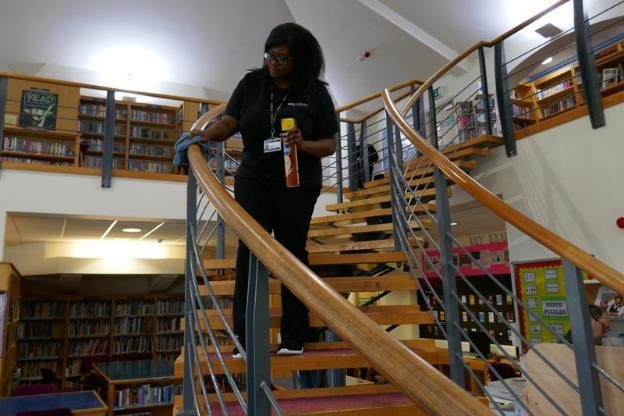
The end of the school year brings a rare window of opportunity. For six weeks or so, classrooms sit empty, corridors fall quiet, and the buildings that thousands of pupils and staff have occupied every day since September are finally still. It’s the ideal moment for a school deep clean, and for facilities managers, it’s one of the most valuable uses of the summer break.

Daily cleaning keeps schools running to a basic hygiene standard throughout the term. But daily cleaning has its limits. It works around pupils and staff, it’s time-pressured, and it can’t address the accumulated grime, bacteria, and build-up that develops in high-traffic environments over months of continuous use. A summer deep clean goes well beyond what routine cleaning can achieve, and it sets the school up to start the new academic year in the best possible condition.
Why Daily Cleaning Isn’t Enough On Its Own?
During term time, cleaning teams do an essential job keeping schools safe and presentable. High-touch surfaces are wiped down, floors are swept and mopped, and washrooms are maintained. But certain areas simply can’t receive the attention they need while the building is occupied. Specialist machinery can’t be brought in mid-term without disrupting lessons. Deep scrubbing of floors, extraction cleaning of carpets, descaling of washrooms, and thorough sanitisation of kitchens all require uninterrupted time and access.
The UK government’s own Buying for Schools guidance explicitly references the need for periodic, non-routine cleaning, including a whole-school deep clean during the summer holidays.
Research backs up the case for it. In 2023/24, 18.1% of pupils in England were persistently absent, missing at least 10% of lessons. Many absences are linked to illness outbreaks, which can spread quickly when surfaces, washrooms, and shared areas aren’t cleaned to a high standard. A thorough deep clean at the end of the summer significantly reduces the bacterial and viral load across the building before pupils return, which matters from the very first day of term.
The Difference A Deep Clean Actually Makes
When a school is empty, cleaning teams can work systematically across the entire site without restriction. Specialist equipment, such as floor scrubbers, steam cleaners, carpet extraction machines, and high-pressure washers, can be brought in and deployed properly. These are tools that would be impractical or disruptive to use during term time, but they make a significant difference to the cleanliness and condition of the building.
The areas that benefit most are typically those that receive the heaviest use and the least thorough attention during the year:
- Hard floors, which accumulate scuff marks, ingrained dirt, and surface damage that daily mopping won’t address.
- Carpeted areas, where dust mites, allergens, and bacteria build up over time and require extraction cleaning to remove properly.
- Washrooms, where limescale, grout staining, and odour build-up require dedicated descaling and sanitisation.
- Kitchens and canteens, which need thorough degreasing of extraction systems, appliances, and food preparation surfaces.
- High-touch points, including door handles, light switches, bannisters, and shared equipment, which can harbour harmful bacteria even after routine cleaning.
The result isn’t just a cleaner building, but a healthier one. Allergens, dust, and pathogens that have built up during the term are removed, improving air quality and reducing the risk of illness spreading through the school population when everyone returns in September.
Peace Of Mind For Facilities Managers
For facilities managers, the start of September comes with enough to do without worrying about whether the building is genuinely clean and compliant. A summer deep clean directly addresses that concern.
Knowing that the school has been systematically cleaned and sanitised throughout means the new academic year starts from a solid baseline. There’s no backlog of deferred cleaning tasks, no areas that have been missed or under-serviced, and no risk of an early-term illness outbreak that traces back to hygiene issues in the building.
There’s also a practical risk management dimension to it. If a member of staff or a pupil has been seriously ill near the end of term, or if there’s been any kind of contamination incident, having a comprehensive deep clean before September means the building has been properly sanitised rather than just routinely cleaned. That reduces the risk of downtime, emergency reactive cleaning, or disruption to the start of term, all of which are far more costly and stressful to deal with than a planned deep clean carried out while the school is empty.
Starting September Right
A school that reopens in September after a proper summer school deep clean is noticeably different. Floors look restored, washrooms smell clean, and classrooms are fresh. Staff and pupils notice it, and it sets a positive tone for the year ahead.
Good cleaning practice creates an environment where pupils can focus, staff feel comfortable, and the building reflects the standard of the institution it houses. The summer holidays are when that work gets done properly.
If you’d like to discuss arranging a summer deep clean for your school, get in touch and we’ll talk through what’s involved.


- Why IT Equipment Cleaning Is Now A Business-Critical Service - October 8, 2026
- How Often Should You Get Your Office IT Equipment Professionally Cleaned? - September 24, 2026
- When Should You Replace Vs Clean Your Office Carpet? - September 10, 2026